

Training for customer facing businesses

Boost reputation and revenue with our evidence based, interactive and relatable training
How our training can help your business
We can help your team to understand what it’s like to be a customer with communication differences after brain injury or illness. Your staff will learn to identify and overcome communication barriers to confidently provide great customer service – even when communication challenges are present.
The benefits





Why it matters to your business
Most people don’t know how to identify a communication difference, or how to respond if a customer’s communication is unclear. Staff may wrongly assume a customer to be drunk or have dementia. This can cause uncomfortable and difficult experiences for both staff and customers.
Lack of awareness of communication differences can lead to high staff turnover, and loss of reputation, customers and revenue.
People living with disabilities, including brain injuries and illness control £274 billion in spending power*.
90% of these people feel excluded* from making purchases because businesses don’t know how to meet their needs.
(*Disability forum Report – What disabled consumers choose to buy and why)
The Equality Act 2010 requires businesses to make reasonable adjustments for people with physical or mental impairments.
How many customers does this impact?
1 in 5 people will face communication differences at some point. For many adults, this happens after brain injury or illness.
To give you an idea of the scale, take just stroke:

Right now, 1.3 million people in the UK are living with the effects of a stroke.
(www.strokeassociation.org)
64% of stroke survivors experience communication differences like aphasia, dysarthria, or apraxia.
(Michell et al., 2021)
And stroke is just one cause of communication differences. There is also:
- traumatic brain injury,
- progressive neurological conditions,
- language led dementia,
- brain tumour…

Our training solution

Inclusive Conversation Training
A disability awareness training course, for non-visible communication differences after brain injury or illness (eg., stroke).
Inclusive conversation training is evidence based, interactive, relatable and creative. It explains what communication differences after brain injury or illness are.
It gives attendees experience of using an “inclusive conversation toolkit”. The toolkit provides simple ways your organisation can adjust to be communication inclusive.

Training format
A half-day interactive face-to-face course. It includes bite-size seminars, interactive quizzes, and small group work to experience communication differences and how the toolkit can ease communication. We are happy to discuss alternative training options if face-to-face does not suit you or your organisation.
Training includes certificate of completion for trainees. Please contact us for further details regarding organisational level 1 certification of awareness with option to display our inclusive conversation logo.
“I encourage EVERYONE to do this.”
– Residential Villages Group Resident Liaison Officer


“I learned a lot about something I was not even aware of.”
– Residential Villages Group Wellbeing Co-ordinator
“I’ve learnt new ways of communicating.”
– Residential Villages Group Wellbeing Co-ordinator
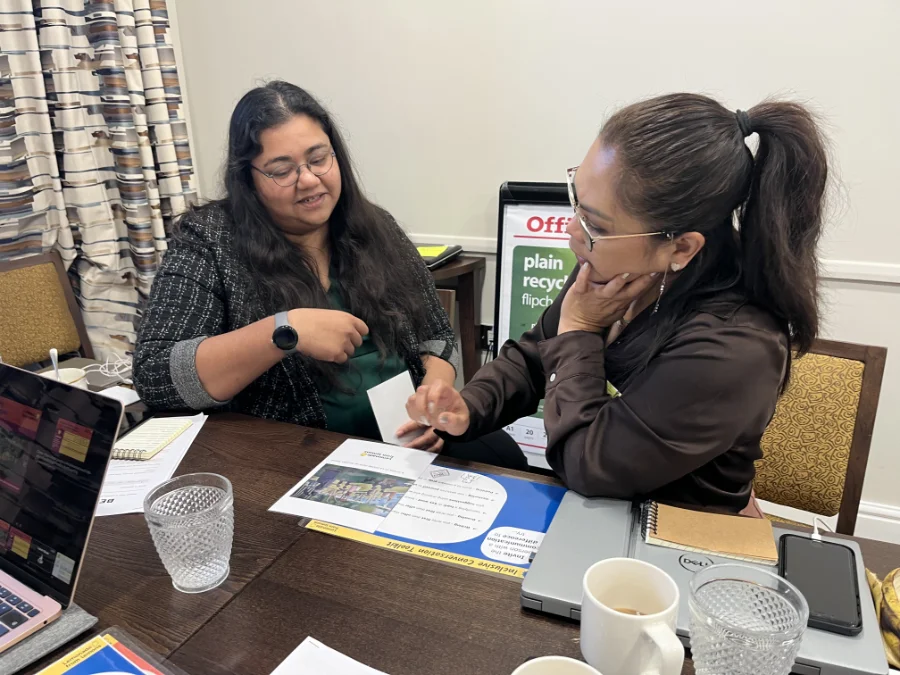
“Fantastic, interactive, lots of discussion.”
– Residential Villages Group Wellbeing Co-ordinator
Our training courses are designed by…
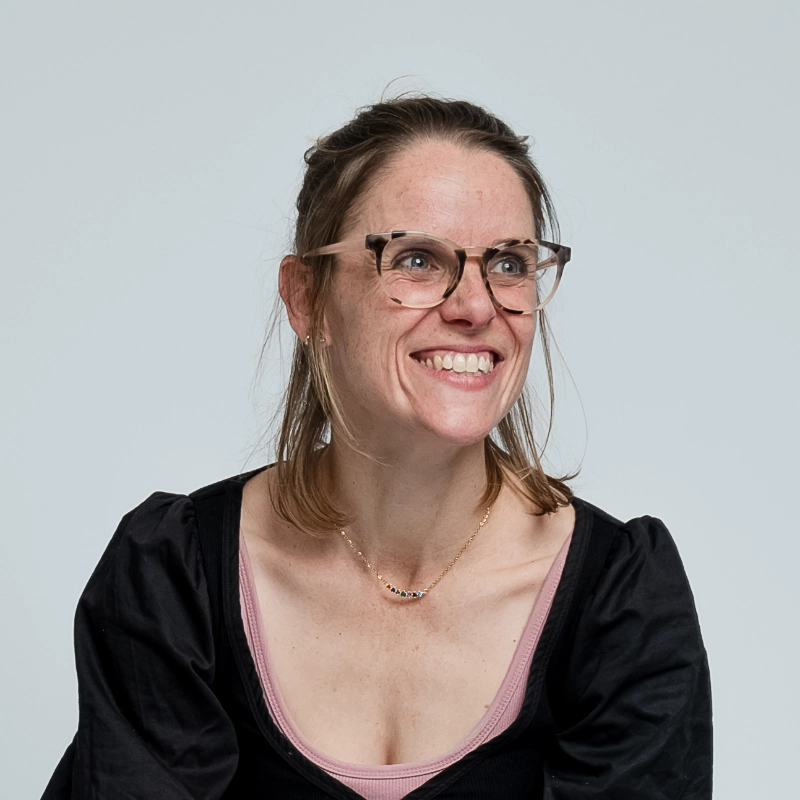
Dr Firle Beckley (the science)
Firle has been a speech and language therapist for over 20 years.
Her research career began on the pioneering Better Conversations with Aphasia research project, led by Dr Suzanne Beeke.
She has initiated a number of creative wellbeing projects with partners including: The Art of Conversation with Aphasia and Zooming Great.
Firle completed her Stroke Association funded PhD in 2024.
Firle’s independent therapy practice is called Firle B Therapies.
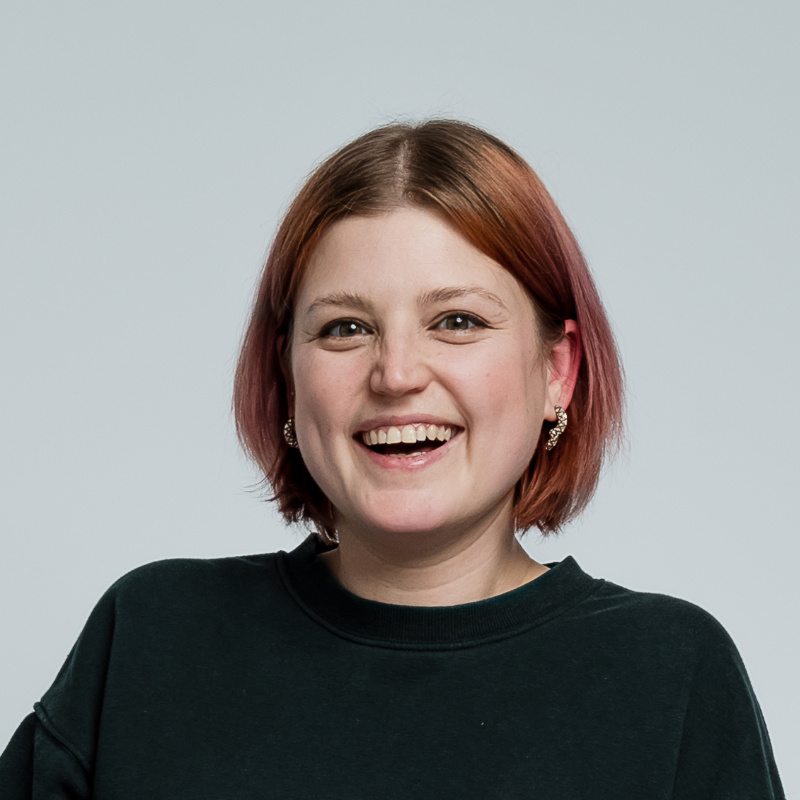
Nikki Hafter (the art)
Nikki is an artist facilitator with a Master’s in Inclusive Arts Practice.
Nikki specialises in using creative arts to support communication with people facing communication challenges.
Nikki has worked with the University of Brighton, De La Warr Pavilion, and Battersea Arts Centre.
Learn more about Nikki’s work at nikkihafter.com
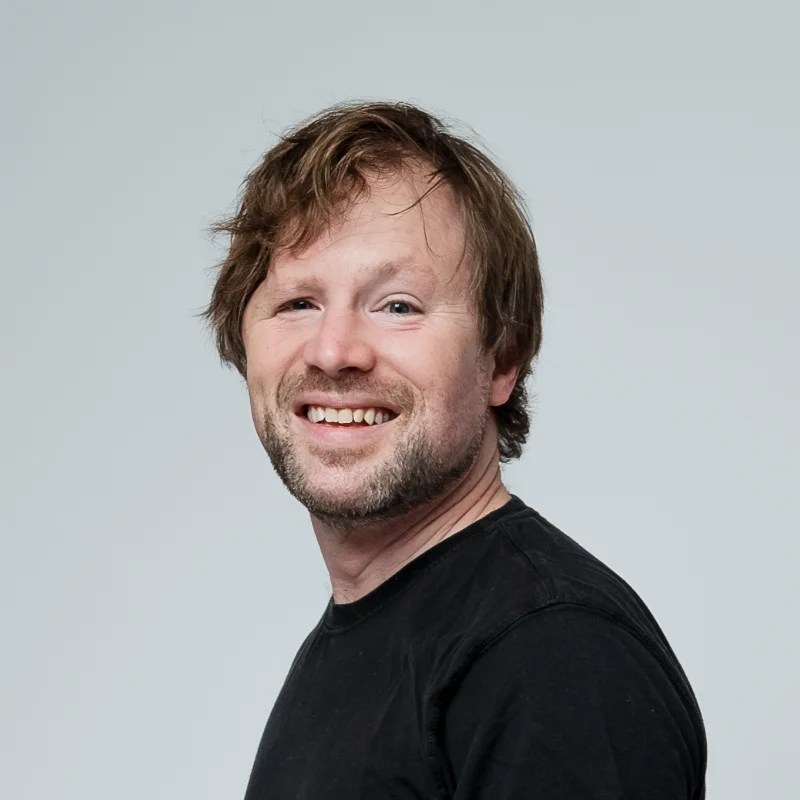
Ben Goldstein (the lived experience)
Ben has a psychology degree.
He used to work as a video editor in London.
Ben has aphasia after a stroke in 2013.
He now volunteers and helps researchers improve speech and language therapy at UCL and City St. George’s.
Ben helps Lemonade from Lemons with his no-nonsense feedback.
Please contact us for further information and prices at hello@lemonadefromlemons.co.uk