Introduction
This is our first guest blog. I am delighted to introduce Dr Haru Yamada, a sociolinguistics researcher and writer with a focus on listening. I first heard Dr Yamada on the Word of Mouth podcast hosted by Michael Rosen. A brilliant podcast. You can find Haru’s episode here: https://www.bbc.co.uk/programmes/m002d8v9.
When I heard Haru talking it dawned on me that I rarely address listening as an active behaviour in my clinical practice or training. Yet 50% of conversation is listening and the number 1 tip for an inclusive communication partner is to give the other person more time – in other words we need to all be better at listening.
So without further chatter from me, here is Dr Haru Yamada’s blog.
Did you know most of us listen fast and slow on an everyday basis?
Listening Fast (like a hare 🐇)
Listening fast helps us find out about things and people so we can move, like a hare, quickly through life.
We listen fast when we need to quickly identify simple and specific information, for example, the platform number of the train we are taking. When we listen fast, we essentially use shortcuts (like #hashtags in social media), to quickly find what we are looking for in someone’s speech. It’s essentially a matching process between our mind maps and the content we are listening to. Listening fast helps us fill in the information we need and hear and confirm answers to the questions we have. Listening fast is an efficient way to categorise words.
When we hash a word and listen fast, we don’t need a full sentence.
Listening slow (like a tortoise 🐢) works differently.
Instead of listening only for hashed content information, we begin listening for everything around it.
When we listen slow, we are finding out about a person and the space they occupy in relation to us.
We do this by understanding things like:
- the person’s emotional states, and
- how they identify and present their relationship to you.
🐢 Listening slow helps us understand the context surrounding a conversation.
When we listen slow, and switch on our inner tortoise, we can begin to understand what the other person could have meant. Listening slow helps you hear the tone of the conversation.
It can ultimately further your understanding of what matters to the other person at the time you are talking to them.
When we listen slow, we can start noticing why some things are said the way they are, and what kinds of things are being left out and why.
Modern life strongly rewards Listening Fast
In a time when technology speeds up messages that arrive constantly, we have come to live in a culture that expects quick fixes, responses, and conversations.
While fast shorthand conversations are efficient and work well in fast-paced environments, some conversations cannot be rushed.
This is particularly true in speaking and listening to people with communication differences, such as aphasia, dysarthria, cognitive communication differences, or neurodivergences.
Our conversations become enhanced and mutually beneficial when we become aware that Listening Fast often makes communication harder rather than easier. We need to activate our channel for Listening Slow.
Turning on your inner tortoise can help build connection by helping you to see the implicit or hidden meanings that aren’t in the words.
Falling off a Scooter (my lived experience)
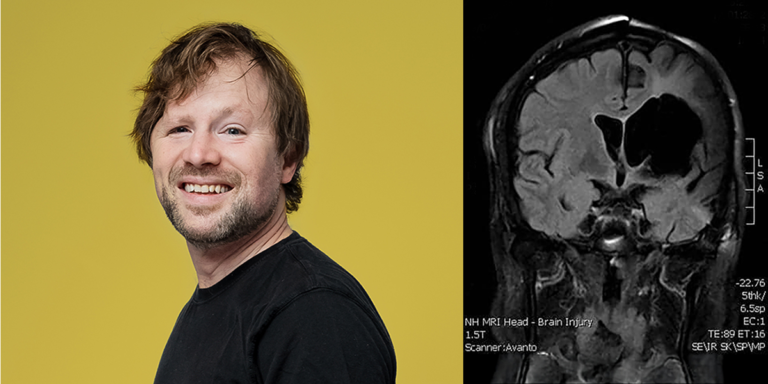
I became acutely aware of the difference between listening fast and slow after a scooter accident that left me with a head injury, hearing loss, and voice loss.
During my month-long recovery in the intensive care unit of a London hospital, I discovered that communication depends on much more than words alone. What helped me most was not receiving more medical information but being with the people who would sit with me, give me their time, and listen, to show me that our relationship mattered as much as what happened to me. That experience taught me that some conversations require more than clarity. They require connection.
The iceberg of communication
We can understand the two speeds of listening, and how they relate to connection, by imagining an iceberg where the visible tip of the iceberg is language itself, containing things like:
Visible tip of communication (language)
🧊 Words
🧊 Speech
🧊 Content
🧊 Instructions
🧊 Information
This is the part we can easily see and hear.
But beneath the surface of the iceberg sits another layer that is often less visible. Underneath communication with high visibility sits the foundation of the human relationship and surrounding context which contains things like:
Beneath the surface of the iceberg sits
🍋 Psychological safety
🍋 Personal history
🍋 Cultural background
🍋 Level of Trust and Confidence
🍋 Stigma, Stereotypes and Biases
🍋 Situational Readiness
🍋 Openness
🍋 Timing
🍋 Fatigue
This deeper layer shapes hearability.
Hearability weighs in on the emotional, social, cultural and relational availability of the people in the conversation to explore whether or not they are able to receive what is being communicated in the first place. This is where connections are made.
Hearability isn’t visibility. Sometimes we are seen and yet still not heard. And because communication differences are often about hearability as well as visibility, sometimes just simplifying language or giving fixed choices doesn’t work. When hearability is at stake, rather than narrow the language further, it helps to widen the space of interaction through awareness, for example, by:
Doing these things creates more safety and is how we actively show patience.
Listen Fast for Information, Listen Slow for Relationship
In my work on listening, I often describe the different channels of Listening Fast and Slow as the difference between listening for information and listening for relationship.
Whereas listening for information helps us gather facts quickly, listening for relationship helps us understand the person behind the words.
We listen both fast and slow, for information and relationship, on a daily basis, but because we are constantly encouraged to speed up listening for information, we need to remind ourselves to slow down to tune in to listen for relationship.
Listening slow for relationship not only allows others to articulate fully what they want to say but also to feel heard.
When we expand the conversational space to make everyone hearable as well as visible, we become the architects of creating safe spaces for healthy conversations.
If you’d like to learn more about listening Dr Haru Yamada has written “KIKU The Japanese Art of Good Listening” which will take you through fourteen different ways we listen. Perfect summer reading! You can buy her fantastic book here
Click here for more information on our Inclusive communication training for your organisation.