Symptoms, causes, and living with aphasia
If someone said they had aphasia, would you know what that means? Would you know how to approach a conversation with them?
Read on or listen to Ben’s audio, to find out whether aphasia is a hair loss condition, a fantastic new facial, or something else…
What aphasia means
The word aphasia originates from 🇬🇷 Greek.
It combines “a” means “without” or “not with”. “Phasis” means “utterance” or “speech”.
So “aphasia” literally means without speech, or speechlessness.
But this is not quite right. Aphasia is so much more than that.
Aphasia changes a person’s ability to use and or understand language.
The means:
- The words we read 📚
- The words we speak 🗣️
- The words we write ✍️ and
- The words we listen to 👂everyday.
But, let’s get something straight…
Aphasia is NOT a change in intellect.
How common aphasia is
Aphasia is more common than we realise.
🧠 The Stroke Association states that 350,000 people in England have aphasia. That is more people than have Multiple Sclerosis, Parkinsons‘ and Motor Neuron Disease combined in England (Neuro-numbers 2019)!
🧠 Further, up to 20% of dementias are thought to have language loss as first symptom (RCSLT Dementia Position Paper 2024).
🧠 But, only 5% of people in the UK know what aphasia is (Simmons-Mackie 2020).
🧠 Low public awareness makes it hugely isolating and mentally hard to live with (Hilari and Northcott 2016).
How does aphasia happen?
Aphasia happens when the part(s) of the brain that store and control language are damaged.
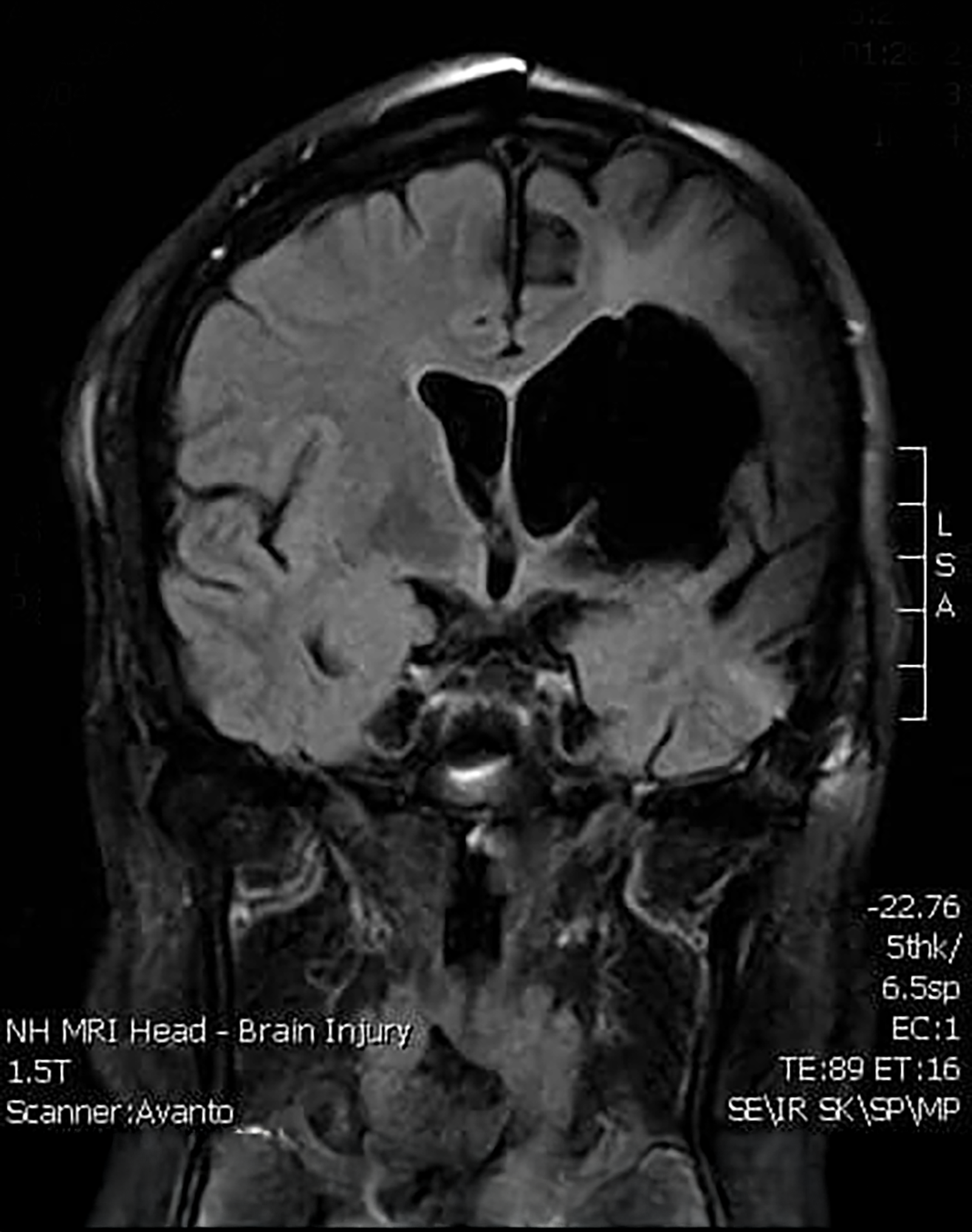
This is our director Ben’s brain after he had his stroke.
The dark patch on the right-side in this image is a hole.
This hole is where Ben’s words were.
Aphasia can happen after a brain injury e.g., left sided stroke, traumatic brain injury (e.g., car crash, falling off a ladder) or a brain tumor. Aphasia can also happen in language led dementias.
The language areas in your brain are usually on the left side (there is always the exception).
The left side of your brain also controls the right side of your body.
This means (if you are right handed) a left sided stroke can also make writing and drawing hard.
Living with aphasia
Really understanding what it’s like to live with aphasia isn’t easy. Aphasia is always in on the front of your mind. This is because language it the gateway to almost everything we do.
“The words won’t come out, even though they’re on the tip of my tongue, they won’t come out.”
– Ben
Try this: List everything you have done today.
Have you done anything that has not needed language?
We struggle with that one too.
Language is everywhere. It is what we use to connect with everyone and almost everything.
From ordering a coffee…
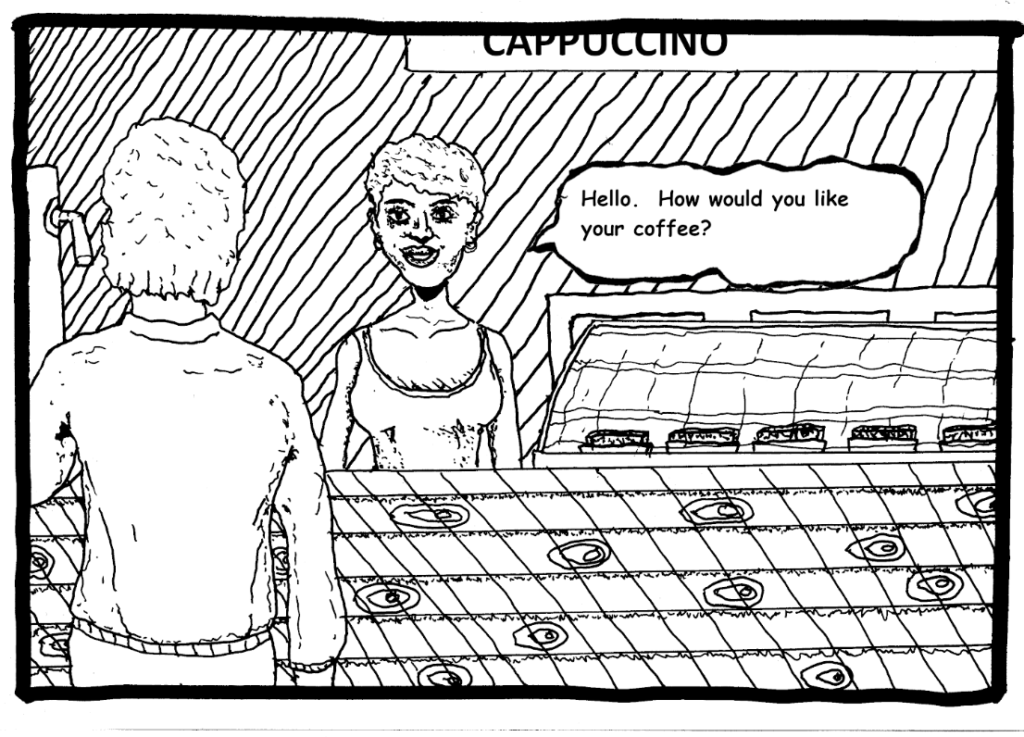
… to forming and nurturing friendships.
“Chit-chat is few and far between for people with aphasia”
– Ben
Postcards filled in by t
he public as part of Being Heard consultation.
Everyone’s aphasia is different
Just as no brain is wired in quite the same way to begin with, a stroke or brain injury can cause different changes for different people.
We’ve all led different lives, building unique vocabularies along the way. As a result each person’s aphasia is unique.
Not all areas of language (speech, writing, reading, understanding) are always affected.
Aphasia can be mild, moderate or severe.
In summary, a person’s aphasia is as individual as they are.
But there are ways we can all make ourselves communication inclusive…
Tips and ticks for being communication inclusive!
Luckily, everyone can make simple changes to make their communication more inclusive.
What you do in your everyday communication – whether it’s in your personal or work life – can make a huge difference to living better with aphasia.
Inclusive communication tips in conversation
Create a conversation map. 🗺️
Write or draw the key or more important words as you say them. A bit like the #hashtag words we use in social media. It can really help to see and hear the words. Relevant objects can also really help the other person see the conversation. For example a physical calendar can help you both see what is coming up.
Give the person time and space. 🕰️
Don’t rush the conversation. Pauses and silences can help the person with aphasia think about what they want to say and what you have just said.
Don’t guess the word! 🤨
If someone is struggling to find a word, wait. If someone wants help, they will probably look at the you. If the person is looking down or away this likely means they are thinking and they just need you to wait.
Repeat back what you’ve understood. 🔁
This is much more helpful than saying “What?” or “I do not understand”. Saying back what you have understood helps the person with aphasia know what you have and have not understood. Even better, write down what you have understood. This way the person with aphasia can see and hear what you’ve said and it naturally slows the speed of the conversation which can be a win-win.
Inclusive communication environment tips
- How easy is it to concentrate on something in a noisy room? Not very! If you are having an important conversation try to find a quieter room, or turn the TV down so you can both concentrate.
- Think about context for your conversation topic and have relevant objects nearby, if you can. For example, it’s easier to explain you’re talking about “four candles” not “fork handles” if you have a candle you can show them!
We hope that helps.
If you have any questions, or want inclusive communication training for your workplace, family or friend, please do get in touch!
Useful resources
https://aphasiaalliance.org/videos
References
Hilari, K., & Northcott, S. (2016). “Struggling to stay connected”: comparing the social relationships of healthy older people and people with stroke and aphasia. Aphasiology, 31(6), 674–687. https://doi.org/10.1080/02687038.2016.1218436
Simmons-Mackie, N., Worrall, L., Shiggins, C., Isaksen, J., McMenamin, R., Rose, T., Guo, Y. E., & Wallace, S. J. (2020). Beyond the statistics: A research agenda in aphasia awareness. Aphasiology, 34(4), 458–471. https://doi.org/10.1080/02687038.2019.1702847